Showing posts with label Condensate drain line. Show all posts

Thursday, January 30, 2014

Attention Owners of 90% Plus Condensing Furnaces

This message is geared to our folks that own 90% plus condensing furnaces. Several of you have been experiencing furnace failure during these unusual extreme cold weather days for our area. What is happening is the condensate drain line for these types of condensing furnaces are freezing which does not allow the condensate water from the furnace to drain outside. Once the water freezes inside the pipe, it cannot drain and therefore shuts down the furnace. Nothing can be done until the pipe thaws out and the condensate water can drain. This is unusual in our region end and why you haven’t experienced this in years before.

One solution to this issue is to wrap a special “heat tape” that is not more than 5 or 6 watts per foot, with an attached thermostat to regulate when the heat tape is energized. This tape can be purchased at Lowes, Ace Hardware and some Taylor Do It Centers, and some plumbing stores in our area. Grainger’s in Norfolk and also Amazon online carry it. Be sure it is tape, not cable, and puts out no more than 5 or 6 watts per foot.

Even with the heat tape on the pipe; any pipe that is outside or on the north wall will still freeze and not allow the condensate to drain. If you have a short drain pipe that can go directly outside the house at a slight downward slope and is only about 6-15 feet long, the heat tape will work. If your furnace drain pipe is longer and goes down a wall, you may still have an issue. Using a heat gun is only temporary as well and even then, the pipe that is inaccessible will still freeze.

Another solution may be to add more insulation to the furnace drain pipe. This may help slow down the process of freezing.

We tried to find this tape last weekend and our whole region was sold out and won’t be back in stock until “maybe Tuesday or Wednesday”. Our local equipment supplier does not even stock this tape because of the extremely low demand. (Until now!)

Looking at our local forecast, it appears after this week, our weather may return to “normal” which means no more freezing condensate pipes hopefully. We understand your frustration and apologize for your comfort issues, but please understand as well; it is out of our control.

We can come out to your house, for a fee and try to help you temporarily, but Mother Nature has to help.

Thank you for choosing All Seasons Heating and Cooling for your home comfort needs.

Wednesday, March 13, 2013

Spring Cleaning?

Winter is over and spring is in the air. Most folks start thinking and planning what is needed to do for spring cleaning. We get asked what can we do about our AC and does it need anything to help it get through a long hot and humid summer?

The answer is YES. You can do several simple things that will be a big help and a few things you need a licensed professional to perform for you.

First the simple things you can do:
  1. Be sure to clean or replace your return air filters every month. These filters are located in the ceiling or wall of your hallway usually. Sometimes they are located in the indoor unit.
  2. Clean the leaves, weeds, bushes, and any other debris from around the outdoor AC unit. It doesn't hurt to spray water on the coils to remove any dirt that may have accumulated there.
  3. If you own a wet/dry shop vacuum, find the one or two white (PVC) plastic pipes that are probably located by the outdoor unit and put the hose on the pipes to clear any clogs that may be in the pipes. This will allow the condensate to drain freely and not back up in your attic where it can cause massive water damage if not attended to.
  4. If you have dogs, it is a good idea to put up a wire fence several feet away from the unit to protect it from your dogs chewing on wires or spraying it. Dog urine will ruin the outdoor unit coils very quickly and can cause refrigerant leaks and loss of heat transfer
  5. Be sure your supply air registers are open in all your rooms to allow the cool air to circulate. Closing them can create pressure issues within your home and uneven temperatures.

A licensed professional is needed to check the refrigerant charge and adjust it if needed, inspect the wiring in both the indoor and outdoor units and service disconnect boxes, inspect the various components such as the compressor, contactor, the start and run capacitors, the amp draw of the compressor and fan motors, and your duct work for leakage and static pressure.


Our company can perform all these tasks during our precision tune-up and offer you energy saving tips to save you money.

Be sure to put us on your spring to do list and then enjoy a worry-free summer from costly and inconvenient AC breakdowns.

Friday, September 14, 2012

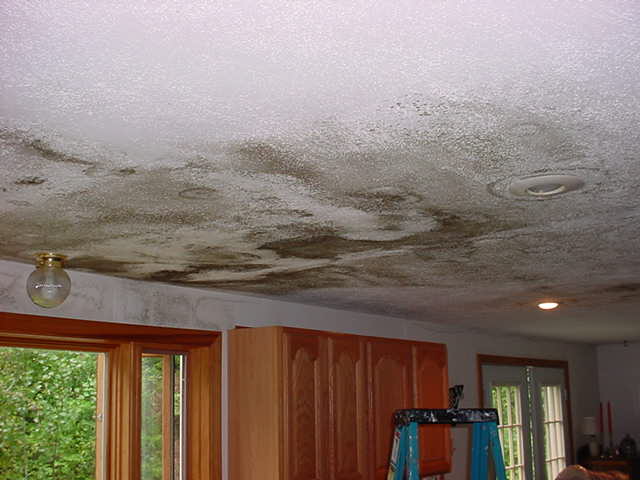
Avoid Water Damaged Ceiling and Property!


  Do you have or have you seen unsightly water spots or bulges in your ceiling? This damage may be caused by a roof leak, plumbing issue, or your air conditioning indoor unit. My air conditioner, really?!

If you have a split system--central air conditioner or heat pump with the indoor unit located in your attic space, you may have serious water issues just lurking. A split system is a heating and cooling system that has two separate cabinets. The unit located outside in your yard is called the condenser unit and the unit located inside your house (in an attic, knee wall space, or in a closet) is called your air handler or furnace and coil.

On a hot humid day, your air condenser can remove up to 20 gallons of water. This water is called condensate and drips off your indoor air handler refrigerant coil into a pan which takes the condensate water outside of your home by a PVC pipe system. This is fine and dandy and how it is supposed to work and it does work perfect most of the time. 20 gallons of water is a lot of water folks and your AC/Heat Pump system removes it every day.

The problem begins when a condensate drain line clogs up and the condensate water can not drain outside like it is designed to do. The water is going to continue to accumulate until you shut off your AC/Heat Pump which is not likely when it is 95 degrees outside. Where does the water go since it can no longer drain outside of your house because the drain pipe is clogged?

It goes to the place of least resistance! This is either your emergency pan (if you have one) or your ceiling or floor! If it is your ceiling, you may get lucky and notice it dripping before the weight of the water caves in the ceiling and you have a tragic mess of drywall, insulation, and water destroying your belongings. Not a good day to say the least!

This disaster can easily be avoided by having a condensate shut-off device installed in the coil drain pipe and one in the emergency drain pan. The devices will shut off the power to your system so the AC/Heat Pump can not operate and therefore, can not produce any more water. It stops the water before damage happens. You will notice your AC/Heat Pump not operating because it will be getting warmer in the house. You can call your local and favorite HVAC service company (All Seasons Heating and Cooling Service Company at 421-9790) to come out and clear your drain pipes or you can try it yourself with a wet/dry shop vac. Simply go outside where the pipes drain and hook the shop vac hose to the pipe and suck out the clog. When the clog is free and the water flows out of the pipe, the device will automatically reset and your AC will come back on. 

You can get twice the protection (a device in the main drain line and one in the emergency backup pan) and peace-of–mind knowing that your AC/Heat Pump system will not cause the water damage in the future. Our devices are inexpensive and only take minutes to install.  

Think of all the damage 20 gallons of water can do in your home.  Are you protected?